Glass is central to how modern workplaces look and feel — open floor plans, floor-to-ceiling windows, and daylight that makes a space feel bigger and more welcoming. The trade-off is heat and glare. In many Brooklyn offices, the same windows that bring in light also bring in afternoon sun that warms the room, washes out screens, and leaves the desks nearest the glass noticeably less comfortable than the rest of the floor. Commercial window film is a practical way to keep the light while managing the heat and glare that come with it.
Why Commercial Buildings Get Hot
Large expanses of glass let in solar energy all day. As the sun moves, west- and south-facing windows take the brunt of it, and by mid-afternoon a room can hold onto heat long after the HVAC system has tried to catch up. Older Brooklyn buildings with single-pane windows and newer towers with big glass façades both feel this in their own way. The result is uneven temperatures, warm zones near the windows, and a cooling system that runs harder to keep the space even.
Comfort and Productivity Work Together
Comfortable people work better, and temperature and glare are two of the most common complaints in any office. When afternoon sun hits a monitor, employees squint, tilt screens, or close blinds and lose the daylight entirely. When a desk sits in a hot pocket by the window, focus drifts to the thermostat. Reducing glare and evening out the temperature removes those small, constant distractions. Solar and heat-control films — the focus of our solar control window film service — are designed to take the edge off the sun without darkening the room.
Daylight Without the Downside
The appeal of window film is that it keeps what people like about big windows — natural light and the view — while cutting what they do not. Compared with blinds and shades, which block the light and the view when they are down, film works continuously in the background. It lets a workplace stay bright and open while reducing heat gain, softening glare, and filtering UV that fades furniture and finishes over time.
Where Window Film Helps Most in a Workplace
West-facing offices and afternoon glare
West-facing rooms are usually the first to benefit. They catch low, direct sun in the afternoon — exactly when glare on screens and heat at the desk are hardest to work through. Film targets that window without requiring anyone to draw the blinds every day.
Conference rooms and glass partitions
Conference rooms with a wall of glass can turn into hot, bright boxes during a long meeting. Film keeps them usable through the afternoon and, paired with a frosted or privacy option, can add discretion at the same time.
Large glass façades and open floors
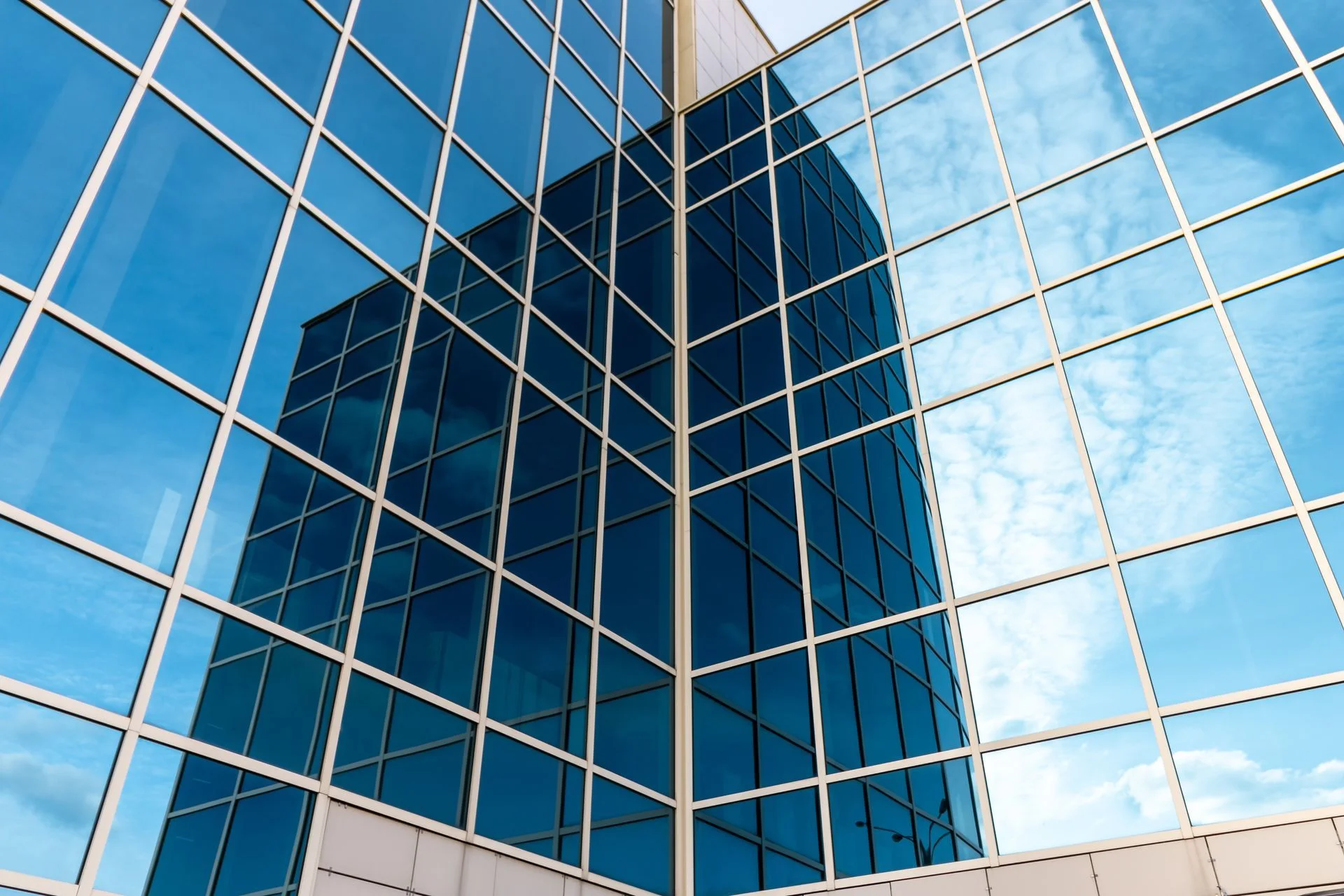
Open-plan floors behind a large façade share their light — and their heat — across the whole space. Treating the façade helps the entire floor feel more even rather than fixing one desk at a time.
Schools and daytime learning spaces
Classrooms and campus offices face the same afternoon sun as any workplace, and glare on boards, screens, and desks is just as disruptive to focus. Reducing heat and glare helps keep learning spaces comfortable through the day without shutting out the daylight that makes a room feel open and welcoming.
Reception and customer-facing areas
Comfort is not only an employee issue. A reception area, waiting room, or retail floor that stays cool and glare-free is more pleasant for clients and customers, too. For medical offices, law firms, schools, and shops, that first impression matters.
HVAC Efficiency and Energy Use
By reducing how much solar heat enters through the glass, window film lightens the load on cooling equipment, which can help an HVAC system run more efficiently during peak sun. The exact effect depends on the building, the glass, the exposure, and the film chosen, so it is best treated as one sensible efficiency measure among several rather than a guaranteed number. It pairs naturally with a broader commercial window tinting plan across a property.
Comfort, Privacy, and a Modern Look
Film also shapes how a workplace presents itself. A clean, even tint gives a building a modern, considered appearance from the street, and reflective or frosted options can add daytime privacy for ground-floor offices or street-facing rooms. When privacy is the priority, our privacy window film covers those needs specifically.
Choosing the Right Commercial Window Film
There is no single best film — the right choice depends on what you are solving for. Heat and glare point toward solar and heat-control films; privacy points toward reflective or frosted films; and existing double-pane or coated glass may narrow the options for compatibility reasons. A short assessment of your building’s exposures and glass is the most reliable way to match a film to each area rather than applying one product everywhere.
Window Film for Brooklyn Workplaces
Brooklyn’s mix of converted warehouses, older commercial buildings, and modern glass offices means no two workplaces have the same sun problem. That variety is exactly why a tailored approach works better than a blanket one — a west-facing conference room, a sunlit retail floor, and a glass-fronted lobby each call for a slightly different solution.
A More Comfortable, Productive Workspace
Managing heat and glare is a small change that employees and customers feel every day: cooler desks, readable screens, steadier temperatures, and a workplace that still enjoys its natural light. If you want to make your building more comfortable and efficient, contact Window Tinting Brooklyn to walk through your space and find the right film for each area.